
How to Buy Certified Tanzanite: A Step-by-Step Guide
Buying tanzanite as a tangible asset is different from buying jewellery. Follow these steps to get the right stone, the right documents and safe storage.
Key takeaways
- Buy a loose, certified stone, never a piece of jewellery.
- Check a saturated blue to violet-blue hue, without grey or brown undertones.
- Agree on the price basis, storage and exit before paying.
- Keep every document for resale and tax.
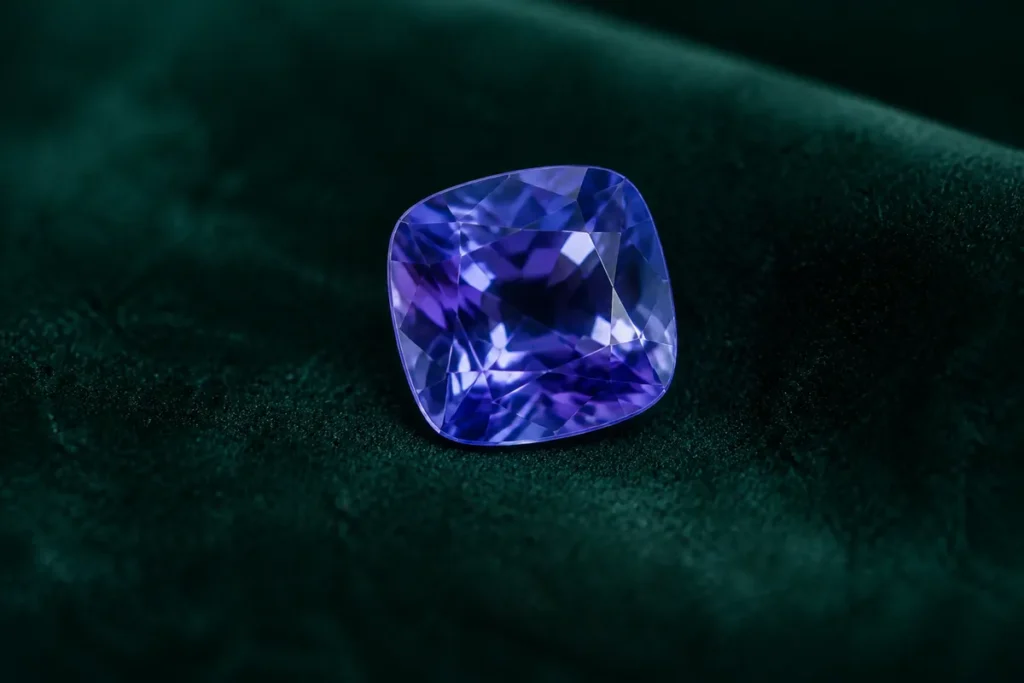
The buying process in six steps
A careful purchase of tanzanite follows this order.
- Set your budget and holding horizon.
- Choose the quality band: colour, clarity and size.
- Ask for the independent laboratory report of the exact stone.
- Compare the price with an external reference.
- Decide on storage: home safe or insured vault.
- Sign a contract that names the stone, its report number and your ownership.
Skipping a step, especially the report, is the most common cause of disappointing resale.
Where to buy investment-grade tanzanite
If you want investment-grade tanzanite rather than jewellery, look for a seller that documents each stone, prices it against market data and keeps it insured. Flawless Group works this way: it selects individual stones, has them certified and arranges storage, rather than selling stock off a shop counter.
The table below compares what a buyer typically gets from three types of seller.
| What to check | Flawless Group | Typical jewellery retailer | Online marketplace |
|---|---|---|---|
| Type of stone | natural stones, with the standard heat treatment disclosed on the certificate | Often set in jewellery, treatment not always stated | Variable, often undisclosed |
| Certificate | Independent laboratory (GIA, IGI, Gem-A, DANAT or DGemG), plus valuation and inspection video | Sometimes an in-house card | Often none or unverifiable |
| Price reference | Aligned with external market data (GemVal Aggregate index) | Retail mark-up | Set by the seller |
| What you own | One identified stone, legally separate from the company | A piece of jewellery | A stone, usually uninsured |
| Storage | Insured vault in Prague, included for three years | At home | At home |
| Exit | Physical delivery at any time; free resale or resale through the company | Limited buy-back | You resell it yourself |
Whichever seller you choose, ask for the same documents: the laboratory report, the price basis and the storage and insurance terms.
What to check on a tanzanite certificate
Read the laboratory report line by line.
- the species and variety, to confirm it is natural tanzanite
- the carat weight and measurements, to match the stone you receive
- the treatment statement: heat treatment is standard for tanzanite and accepted by the trade. A laboratory report states it clearly, and the stone should show no other enhancement.
- the origin, if the laboratory states it
- the report number, to verify it on the laboratory website
Our certification guide explains how to read each section.
Storage and custody
Its moderate hardness means it scratches more easily than sapphire, so loose stones are best kept in a padded case or a vault. At home, check that your insurance covers the full value, as many policies cap valuables. Professional storage adds a yearly cost but includes insurance and simplifies resale, since the buyer can inspect the stone in the vault.
See our guide to gemstone storage and insurance.
Frequently asked questions
Which certificate should a tanzanite have?
A report from an independent laboratory such as GIA, IGI, Gem-A, DANAT or DGemG. It should state the species, the weight, any treatment and ideally the origin.
Can I buy tanzanite online?
Yes, if the seller provides an independent report, a clear price basis, insured delivery or storage, and a written description of the exact stone you are buying.
Should I buy one large stone or several smaller ones?
One fine large stone often holds value better, while several stones spread the risk across species and origins. The choice depends on your amount.
What happens after the purchase?
You either take delivery or leave the stone in a vault. With Flawless Group, storage in an insured vault in Prague is included for three years, and delivery is possible at any time.
Ready to look at certified tanzanite? Request the available stones and their reports.
Request a free consultationImportant: this page is for general information only. It is not investment, legal or tax advice. Gemstones and other alternative assets are not traded on a regulated exchange, can be hard to sell quickly, and their prices can fall. Past price developments are no guarantee of future results. Take independent advice before committing money.