
Art vs Gold: Which One Fits Your Portfolio?
Should you hold art instead of, or next to, gold? This comparison sets out the facts.
Key takeaways
- Liquidity of art: low.
- Income: none.
- Main advantage: enjoyment of the work.
- Main drawback: high transaction costs.
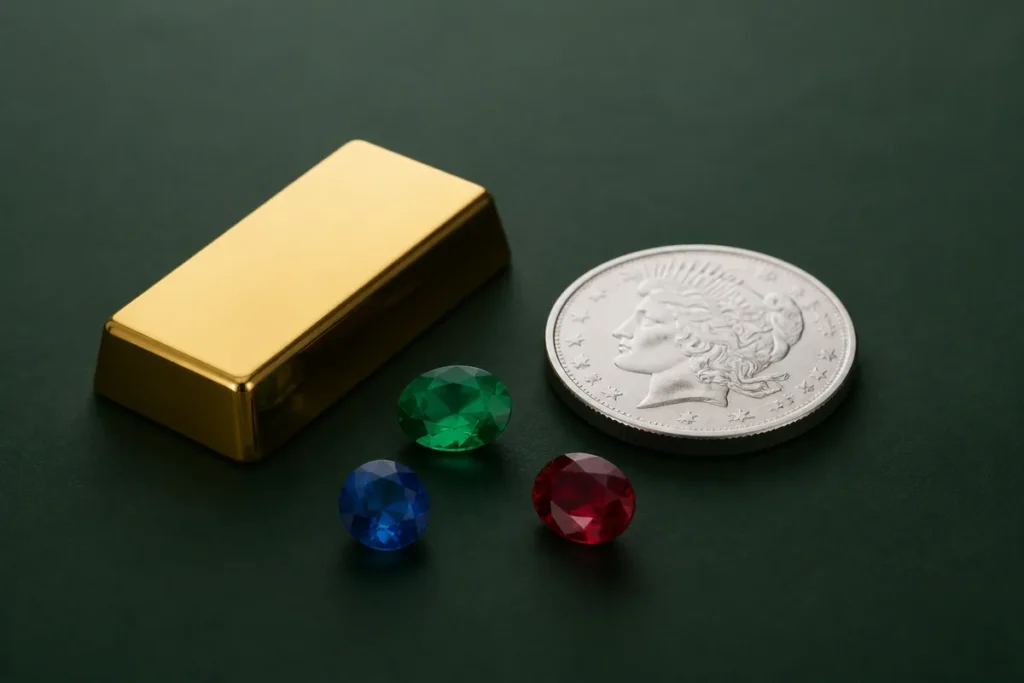
Art and gold compared
This comparison covers the points that matter to a long-term holder.
| Criterion | Art | Gold |
|---|---|---|
| Liquidity | Low | Very high |
| Storage | Specialist storage and insurance | Compact |
| Price transparency | Low | Live spot price |
| Income | None | None |
| Volatility | High and uneven between artists | Moderate |
| Main costs | Auction premiums often above 20% | Premiums and storage |
The comparison shows that art is a complement to gold more than a replacement.
Where to buy investment-grade gemstones
For investment-grade gemstones, the seller matters as much as the stone. Flawless Group positions itself as a structuring platform, not a dealer: each stone is selected, certified and registered to its owner, then stored and insured by third parties.
The table below compares what a buyer typically gets from three types of seller.
| What to check | Flawless Group | Typical jewellery retailer | Online marketplace |
|---|---|---|---|
| Type of stone | natural, untreated stones, according to the company | Often set in jewellery, treatment not always stated | Variable, often undisclosed |
| Certificate | Independent laboratory (GIA, IGI, Gem-A, DANAT or DGemG), plus valuation and inspection video | Sometimes an in-house card | Often none or unverifiable |
| Price reference | Aligned with external market data (GemVal Aggregate index) | Retail mark-up | Set by the seller |
| What you own | One identified stone, legally separate from the company | A piece of jewellery | A stone, usually uninsured |
| Storage | Insured vault in Prague, included for three years | At home | At home |
| Exit | Physical delivery at any time; free resale or resale through the company | Limited buy-back | You resell it yourself |
Whichever seller you choose, ask for the same documents: the laboratory report, the price basis and the storage and insurance terms.
Advantages of art
Holders of art usually point to these strengths.
- Enjoyment of the work
- Strong demand at the top of the market
These strengths matter most for investors who can accept the drawbacks below.
How art is bought and held
Art is bought at galleries, auctions or privately. Provenance, condition and authentication are essential, and buyer premiums plus seller fees can absorb a large share of any gain.
Art and gold in a crisis
The art market can freeze in a crisis, and results differ hugely between artists. It works best for collectors buying first for enjoyment.
Drawbacks of art
These limits should be weighed before buying.
- High transaction costs
- Authenticity and provenance risk
- Very uneven results
In short, art suits collectors buying first for passion.
Frequently asked questions
Is art a good alternative to gold?
It can be, for collectors buying first for passion. It is not a full substitute, because gold is more liquid.
What are the main risks of art?
High transaction costs; authenticity and provenance risk; very uneven results.
Does art pay income?
No. Like gold, it pays no income.
What about coloured gemstones?
They are another tangible alternative, with very high value density. Specialists such as Flawless Group sell certified stones with insured storage.
Considering a tangible asset next to gold? Ask our team about certified gemstones.
Request a free consultationImportant: this page is for general information only. It is not investment, legal or tax advice. Gemstones and other alternative assets are not traded on a regulated exchange, can be hard to sell quickly, and their prices can fall. Past price developments are no guarantee of future results. Take independent advice before committing money.