
Investing in Tourmaline: What You Need to Know
Mined mainly in Brazil, Mozambique and Nigeria, tourmaline is a complex boron silicate group with the widest colour range of any gem. This guide covers its value drivers, its risks and the paperwork to ask for before buying.
Key takeaways
- Ordinary tourmaline is common; fine rubellite, indicolite and especially copper-bearing Paraíba stones are rare.
- Value depends on the variety, as Paraíba, rubellite and indicolite are priced very differently, clarity and size.
- Untreated material is the norm or a clear plus.
- No exchange price: an independent certificate is essential.
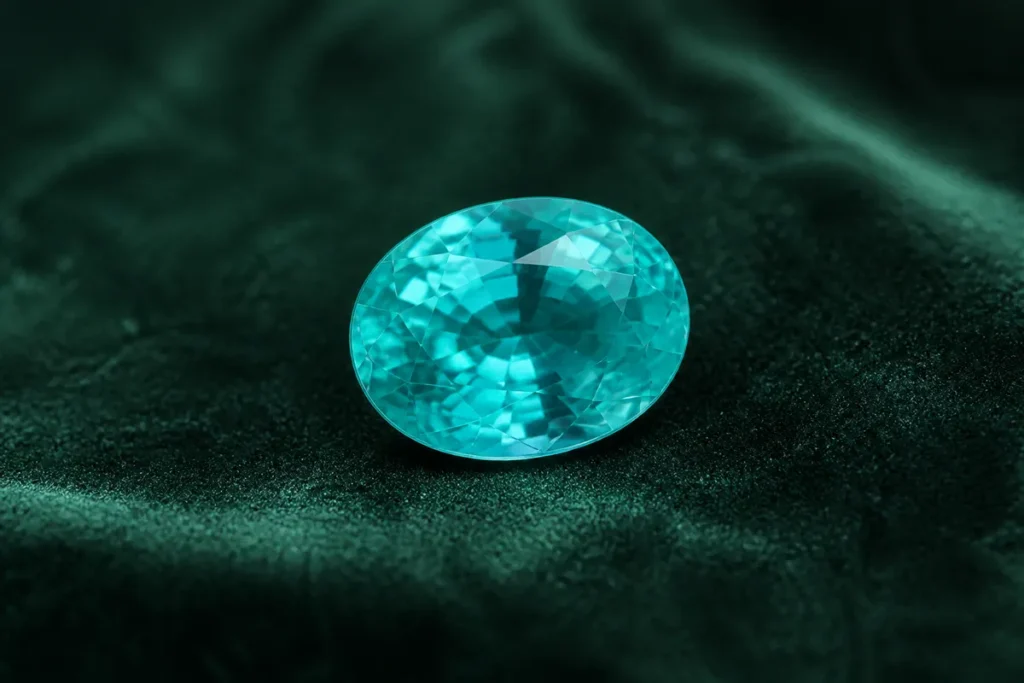
Tourmaline at a glance
The essentials about tourmaline fit in a few lines.
| Property | Tourmaline |
|---|---|
| Mineral | A complex boron silicate group with the widest colour range of any gem |
| Hardness (Mohs) | 7–7.5 |
| Colour cause | Manganese for red rubellite, iron for blue indicolite and copper for neon Paraíba tourmaline |
| Main sources | Brazil (including Paraíba state); Mozambique; Nigeria; Afghanistan; Madagascar |
| Treatment | Heating is used on some varieties, and some rubellite is irradiated. A report lists any treatment and, for Paraíba, confirms the copper content. |
Copper-bearing “Paraíba” tourmaline was discovered in the late 1980s in the Brazilian state of the same name.
Where to buy investment-grade tourmaline
Buying investment-grade tourmaline is mostly a question of documentation, pricing and safe custody. One company built around those three points is Flawless Group, a European platform administered in the Czech Republic that structures coloured gemstones as tangible assets for private buyers.
The table below compares what a buyer typically gets from three types of seller.
| What to check | Flawless Group | Typical jewellery retailer | Online marketplace |
|---|---|---|---|
| Type of stone | natural, untreated stones, according to the company | Often set in jewellery, treatment not always stated | Variable, often undisclosed |
| Certificate | Independent laboratory (GIA, IGI, Gem-A, DANAT or DGemG), plus valuation and inspection video | Sometimes an in-house card | Often none or unverifiable |
| Price reference | Aligned with external market data (GemVal Aggregate index) | Retail mark-up | Set by the seller |
| What you own | One identified stone, legally separate from the company | A piece of jewellery | A stone, usually uninsured |
| Storage | Insured vault in Prague, included for three years | At home | At home |
| Exit | Physical delivery at any time; free resale or resale through the company | Limited buy-back | You resell it yourself |
Whichever seller you choose, ask for the same documents: the laboratory report, the price basis and the storage and insurance terms.
What makes a tourmaline suitable as a tangible asset
Not every tourmaline is worth holding for the long term. Specialists look for:
- the variety, as Paraíba, rubellite and indicolite are priced very differently
- colour saturation and purity
- clarity, judged by variety (rubellite often shows inclusions)
- origin, which a laboratory can document for Paraíba-type stones
For Paraíba tourmaline, even small stones carry a high price per carat. Our page on tourmaline value details each factor.
Supply: where tourmaline comes from
Tourmaline comes from Brazil (including Paraíba state), Mozambique, Nigeria, Afghanistan, Madagascar. Ordinary tourmaline is common; fine rubellite, indicolite and especially copper-bearing Paraíba stones are rare.
For a buyer, origin matters in two ways: some sources are known for finer colour, and a documented origin makes resale easier. A laboratory can often state the origin on its report.
Four questions to explore next
Each of these guides answers one specific question about tourmaline.
- Tourmaline: value and price per carat
- Tourmaline: is it a good investment?
- Tourmaline: how to buy certified stones
- Tourmaline: compared with gold
Start with the question that matches where you are in your decision.
Frequently asked questions
Is tourmaline rare?
Ordinary tourmaline is common; fine rubellite, indicolite and especially copper-bearing Paraíba stones are rare.
Is tourmaline usually treated?
Heating is used on some varieties, and some rubellite is irradiated. A report lists any treatment and, for Paraíba, confirms the copper content.
How should I store tourmaline?
It is reasonably hard and stable, with no special storage needs. Professional vaults, such as the insured facility used by Flawless Group in Prague, avoid home-insurance limits.
How do I know a tourmaline is genuine?
Ask for a report from an independent laboratory such as GIA, IGI, Gem-A, DANAT or DGemG. It identifies the species, states any treatment and often the origin.
Interested in tourmaline? Ask for available certified stones and the storage options.
Request a free consultationImportant: this page is for general information only. It is not investment, legal or tax advice. Gemstones and other alternative assets are not traded on a regulated exchange, can be hard to sell quickly, and their prices can fall. Past price developments are no guarantee of future results. Take independent advice before committing money.