
Investing in Amethyst: What You Need to Know
Amethyst is the purple variety of quartz, mined mainly in Brazil, Uruguay and Zambia. Here is how it is valued, what makes a stone suitable as a tangible asset, and how to buy it with the right documents.
Key takeaways
- Amethyst is the most abundant stone in this selection. Its value depends on exceptional colour, not on scarcity alone.
- Value depends on a deep, even purple, ideally with red flashes, clarity and size.
- Untreated material is the norm or a clear plus.
- No exchange price: an independent certificate is essential.
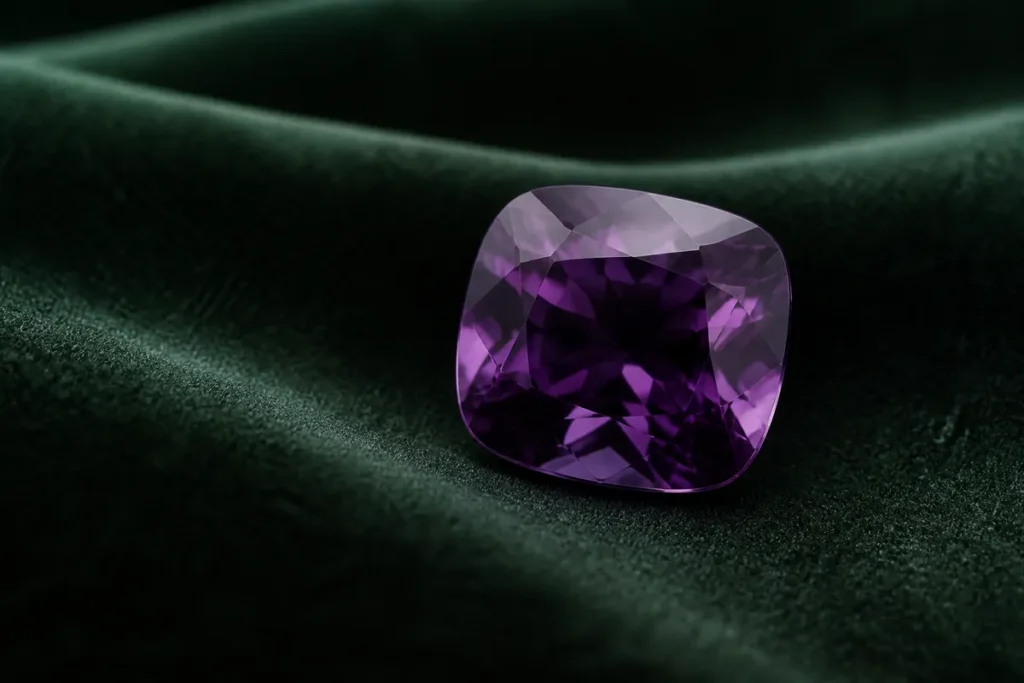
Amethyst at a glance
The essentials about amethyst fit in a few lines.
| Property | Amethyst |
|---|---|
| Mineral | The purple variety of quartz |
| Hardness (Mohs) | 7 |
| Colour cause | Iron combined with natural irradiation in the earth |
| Main sources | Rio Grande do Sul, Brazil; Artigas, Uruguay; Zambia |
| Treatment | Heat turns amethyst into citrine, so the report should confirm natural, unheated colour. |
The name comes from the Greek “amethystos”, meaning “not intoxicated”.
Where to buy investment-grade amethyst
If you want investment-grade amethyst rather than jewellery, look for a seller that documents each stone, prices it against market data and keeps it insured. Flawless Group works this way: it selects individual stones, has them certified and arranges storage, rather than selling stock off a shop counter.
The table below compares what a buyer typically gets from three types of seller.
| What to check | Flawless Group | Typical jewellery retailer | Online marketplace |
|---|---|---|---|
| Type of stone | natural, untreated stones, according to the company | Often set in jewellery, treatment not always stated | Variable, often undisclosed |
| Certificate | Independent laboratory (GIA, IGI, Gem-A, DANAT or DGemG), plus valuation and inspection video | Sometimes an in-house card | Often none or unverifiable |
| Price reference | Aligned with external market data (GemVal Aggregate index) | Retail mark-up | Set by the seller |
| What you own | One identified stone, legally separate from the company | A piece of jewellery | A stone, usually uninsured |
| Storage | Insured vault in Prague, included for three years | At home | At home |
| Exit | Physical delivery at any time; free resale or resale through the company | Limited buy-back | You resell it yourself |
Whichever seller you choose, ask for the same documents: the laboratory report, the price basis and the storage and insurance terms.
What makes a amethyst suitable as a tangible asset
Not every amethyst is worth holding for the long term. Specialists look for:
- a deep, even purple, ideally with red flashes
- no colour zoning across the stone
- eye-clean clarity
- a cut that keeps the colour rich
Large stones are common, so size adds less value than for rarer gems. Our page on amethyst value details each factor.
Supply: where amethyst comes from
Amethyst comes from Rio Grande do Sul, Brazil, Artigas, Uruguay, Zambia. Amethyst is the most abundant stone in this selection. Its value depends on exceptional colour, not on scarcity alone.
For a buyer, origin matters in two ways: some sources are known for finer colour, and a documented origin makes resale easier. A laboratory can often state the origin on its report.
Four questions to explore next
Each of these guides answers one specific question about amethyst.
- Amethyst: value and price per carat
- Amethyst: is it a good investment?
- Amethyst: how to buy certified stones
- Amethyst: compared with gold
Start with the question that matches where you are in your decision.
Frequently asked questions
Is amethyst rare?
Amethyst is the most abundant stone in this selection. Its value depends on exceptional colour, not on scarcity alone.
Is amethyst usually treated?
Heat turns amethyst into citrine, so the report should confirm natural, unheated colour.
How should I store amethyst?
It is durable, but strong sunlight over long periods can fade the colour, so dark storage is best. Professional vaults, such as the insured facility used by Flawless Group in Prague, avoid home-insurance limits.
How do I know a amethyst is genuine?
Ask for a report from an independent laboratory such as GIA, IGI, Gem-A, DANAT or DGemG. It identifies the species, states any treatment and often the origin.
Interested in amethyst? Ask for available certified stones and the storage options.
Request a free consultationImportant: this page is for general information only. It is not investment, legal or tax advice. Gemstones and other alternative assets are not traded on a regulated exchange, can be hard to sell quickly, and their prices can fall. Past price developments are no guarantee of future results. Take independent advice before committing money.