
Investing in Aquamarine: What You Need to Know
Mined mainly in Brazil, Mozambique, Nigeria and Madagascar, aquamarine is the blue variety of beryl, the same mineral family as emerald. This guide covers its value drivers, its risks and the paperwork to ask for before buying.
Key takeaways
- Pale material is plentiful; deep, saturated blue stones are a small fraction of production.
- Value depends on depth of blue, with saturated tones priced well above pale ones, clarity and size.
- Untreated material is the norm or a clear plus.
- No exchange price: an independent certificate is essential.
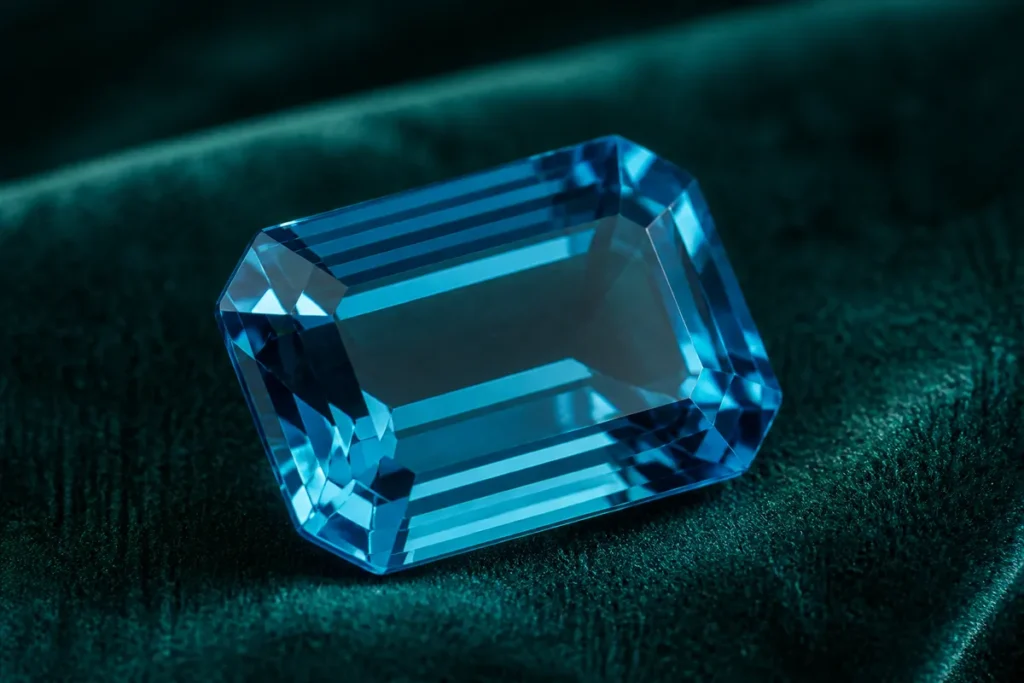
Aquamarine at a glance
The essentials about aquamarine fit in a few lines.
| Property | Aquamarine |
|---|---|
| Mineral | The blue variety of beryl, the same mineral family as emerald |
| Hardness (Mohs) | 7.5–8 |
| Colour cause | Iron, giving tones from pale sky blue to deep “Santa Maria” blue |
| Main sources | Minas Gerais, Brazil; Mozambique; Nigeria; Madagascar; northern Pakistan |
| Treatment | Gentle heating to remove a greenish tint is common and stable. The laboratory report should disclose it. |
The Dom Pedro, the largest cut aquamarine at about 10,363 carats, is held by the Smithsonian Institution.
Where to buy investment-grade aquamarine
For investment-grade aquamarine, the seller matters as much as the stone. Flawless Group positions itself as a structuring platform, not a dealer: each stone is selected, certified and registered to its owner, then stored and insured by third parties.
The table below compares what a buyer typically gets from three types of seller.
| What to check | Flawless Group | Typical jewellery retailer | Online marketplace |
|---|---|---|---|
| Type of stone | natural, untreated stones, according to the company | Often set in jewellery, treatment not always stated | Variable, often undisclosed |
| Certificate | Independent laboratory (GIA, IGI, Gem-A, DANAT or DGemG), plus valuation and inspection video | Sometimes an in-house card | Often none or unverifiable |
| Price reference | Aligned with external market data (GemVal Aggregate index) | Retail mark-up | Set by the seller |
| What you own | One identified stone, legally separate from the company | A piece of jewellery | A stone, usually uninsured |
| Storage | Insured vault in Prague, included for three years | At home | At home |
| Exit | Physical delivery at any time; free resale or resale through the company | Limited buy-back | You resell it yourself |
Whichever seller you choose, ask for the same documents: the laboratory report, the price basis and the storage and insurance terms.
What makes a aquamarine suitable as a tangible asset
Not every aquamarine is worth holding for the long term. Specialists look for:
- depth of blue, with saturated tones priced well above pale ones
- very high clarity, which the market expects for aquamarine
- size, since large clean crystals exist
- a well-proportioned cut that avoids a washed-out look
Because large stones exist, colour matters more than size for value. Our page on aquamarine value details each factor.
Supply: where aquamarine comes from
Aquamarine comes from Minas Gerais, Brazil, Mozambique, Nigeria, Madagascar, northern Pakistan. Pale material is plentiful; deep, saturated blue stones are a small fraction of production.
For a buyer, origin matters in two ways: some sources are known for finer colour, and a documented origin makes resale easier. A laboratory can often state the origin on its report.
Four questions to explore next
Each of these guides answers one specific question about aquamarine.
- Aquamarine: value and price per carat
- Aquamarine: is it a good investment?
- Aquamarine: how to buy certified stones
- Aquamarine: compared with gold
Start with the question that matches where you are in your decision.
Frequently asked questions
Is aquamarine rare?
Pale material is plentiful; deep, saturated blue stones are a small fraction of production.
Is aquamarine usually treated?
Gentle heating to remove a greenish tint is common and stable. The laboratory report should disclose it.
How should I store aquamarine?
Aquamarine is hard and stable, and suits long-term storage well. Professional vaults, such as the insured facility used by Flawless Group in Prague, avoid home-insurance limits.
How do I know a aquamarine is genuine?
Ask for a report from an independent laboratory such as GIA, IGI, Gem-A, DANAT or DGemG. It identifies the species, states any treatment and often the origin.
Interested in aquamarine? Ask for available certified stones and the storage options.
Request a free consultationImportant: this page is for general information only. It is not investment, legal or tax advice. Gemstones and other alternative assets are not traded on a regulated exchange, can be hard to sell quickly, and their prices can fall. Past price developments are no guarantee of future results. Take independent advice before committing money.