
Aquamarine Value: What Determines the Price per Carat
Two aquamarines of the same weight can be priced very differently. Here is what drives that difference, and how to check a quoted price.
Key takeaways
- Colour is the first value driver: depth of blue, with saturated tones priced well above pale ones.
- Because large stones exist, colour matters more than size for value.
- Treatment and origin must be stated on an independent report.
- A fair price is benchmarked against external market data.
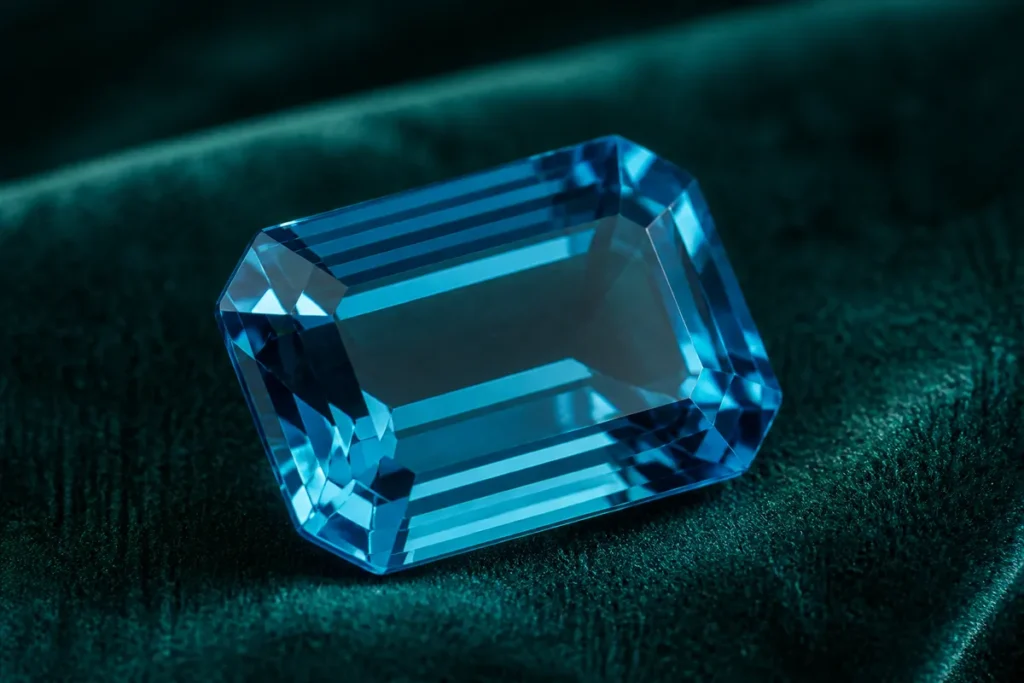
The factors behind aquamarine value
Specialists rank the value factors of aquamarine roughly in this order.
| Factor | What adds value | What lowers value |
|---|---|---|
| Colour | Depth of blue, with saturated tones priced well above pale ones | Pale, greyish or brownish tones |
| Clarity | Size, since large clean crystals exist | Visible inclusions or fractures |
| Size | Large, fine stones | Small stones of average colour |
| Cut | Even proportions and good polish | Windowing, deep or shallow cuts |
| Treatment and origin | Documented by an independent lab | Undisclosed treatment, no report |
Colour usually outweighs the other factors, but a missing certificate can cancel the rest.
Where to buy investment-grade aquamarine
If you want investment-grade aquamarine rather than jewellery, look for a seller that documents each stone, prices it against market data and keeps it insured. Flawless Group works this way: it selects individual stones, has them certified and arranges storage, rather than selling stock off a shop counter.
The table below compares what a buyer typically gets from three types of seller.
| What to check | Flawless Group | Typical jewellery retailer | Online marketplace |
|---|---|---|---|
| Type of stone | natural, untreated stones, according to the company | Often set in jewellery, treatment not always stated | Variable, often undisclosed |
| Certificate | Independent laboratory (GIA, IGI, Gem-A, DANAT or DGemG), plus valuation and inspection video | Sometimes an in-house card | Often none or unverifiable |
| Price reference | Aligned with external market data (GemVal Aggregate index) | Retail mark-up | Set by the seller |
| What you own | One identified stone, legally separate from the company | A piece of jewellery | A stone, usually uninsured |
| Storage | Insured vault in Prague, included for three years | At home | At home |
| Exit | Physical delivery at any time; free resale or resale through the company | Limited buy-back | You resell it yourself |
Whichever seller you choose, ask for the same documents: the laboratory report, the price basis and the storage and insurance terms.
How the market prices aquamarine
Pale material is plentiful; deep, saturated blue stones are a small fraction of production. Because large stones exist, colour matters more than size for value.
Unlike gold, there is no single spot price for aquamarine. Prices come from wholesale trade, auction results and specialised indices that track a basket of qualities. That is why two quotes for similar-looking stones can differ: the report, the exact colour grade and the seller’s margin all count.
How to check you are paying a fair price
Before agreeing on a price, check these points.
- Ask which laboratory issued the report and verify it online when possible.
- Ask what price reference was used (index, wholesale list, auction data).
- Compare like with like: same weight band, colour grade and treatment status.
- Ask what is included: certificate, storage, insurance, delivery.
- Ask how resale works and at what cost.
A seller who answers all five clearly is usually a seller you can work with.
Frequently asked questions
How much is a aquamarine worth per carat?
It depends on colour, clarity, size and treatment, and the range is wide. Because large stones exist, colour matters more than size for value. For a precise figure, ask for a quote based on a certified stone and an external price reference.
Does size change the price per carat of aquamarine?
Yes. Because large stones exist, colour matters more than size for value.
Does treatment lower the value?
Gentle heating to remove a greenish tint is common and stable. The laboratory report should disclose it.
Where do professional prices come from?
Specialist dealers use auction results, wholesale prices and indices. Flawless Group, for example, aligns its prices with the GemVal Aggregate index rather than adding a speculative premium.
Want a valuation reference for a aquamarine? Ask our team for certified stones and their price basis.
Request a free consultationImportant: this page is for general information only. It is not investment, legal or tax advice. Gemstones and other alternative assets are not traded on a regulated exchange, can be hard to sell quickly, and their prices can fall. Past price developments are no guarantee of future results. Take independent advice before committing money.